-
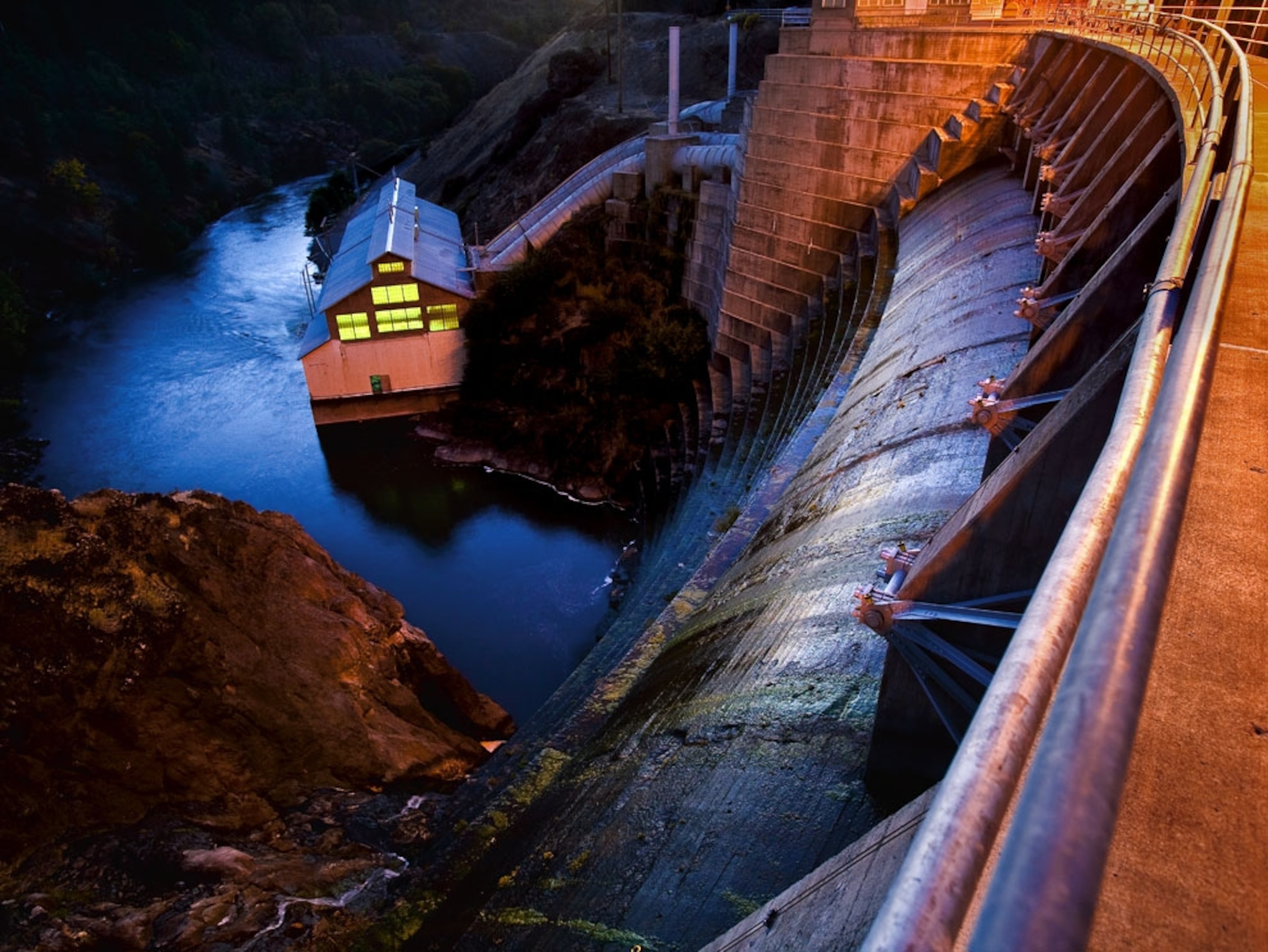
Klamath River Dam
Photograph by David McLain
Dams such as northern California’s Copco No. 1 have reshaped much of the Klamath River Basin in the Pacific Northwest. They also fuel conflict over the river’s waters—both farms and fish need the critical resource.
In February 2010, conservationists, fishermen, Native Americans, and farmers reached a historic compromise to share water between fish and farms across Oregon and California and remove four hydroelectric dams as early as 2020.
Klamath dams produce power for some 70,000 people, but these mammoth structures have destroyed some of the continent’s most prolific salmon habitat. Conservations hail the 2010 plan as the largest river restoration effort in American history.
-
Irrigation Sprinklers
Photograph by Bobby Haas
Crops near Cape Town, South Africa, enjoy regular soakings from a massive irrigation system. Seventy percent of the water humans draw from aquifers, lakes, and rivers is used for agriculture. Food production can be surprisingly water intensive: It can take 132 gallons (500 liters) of water to produce one pound (0.45 kilograms) of wheat, 449 gallons (1,700 liters) to produce one pound of rice, and 17,990 gallons (68,100 liters) to produce one pound of beef.
-
Drip Irrigation, Israel
Photograph by James L. Stanfield
Ninety-seven percent of Earth’s water is salty ocean water and another two percent is trapped in Earth’s ice caps and glaciers. The precious one percent that remains must be used wisely.
Drip irrigation, seen here in action on an Israeli farm, can cut agricultural water demand by seventy percent—yet it’s used on only 2 percent of the planet’s irrigated cropland.
-
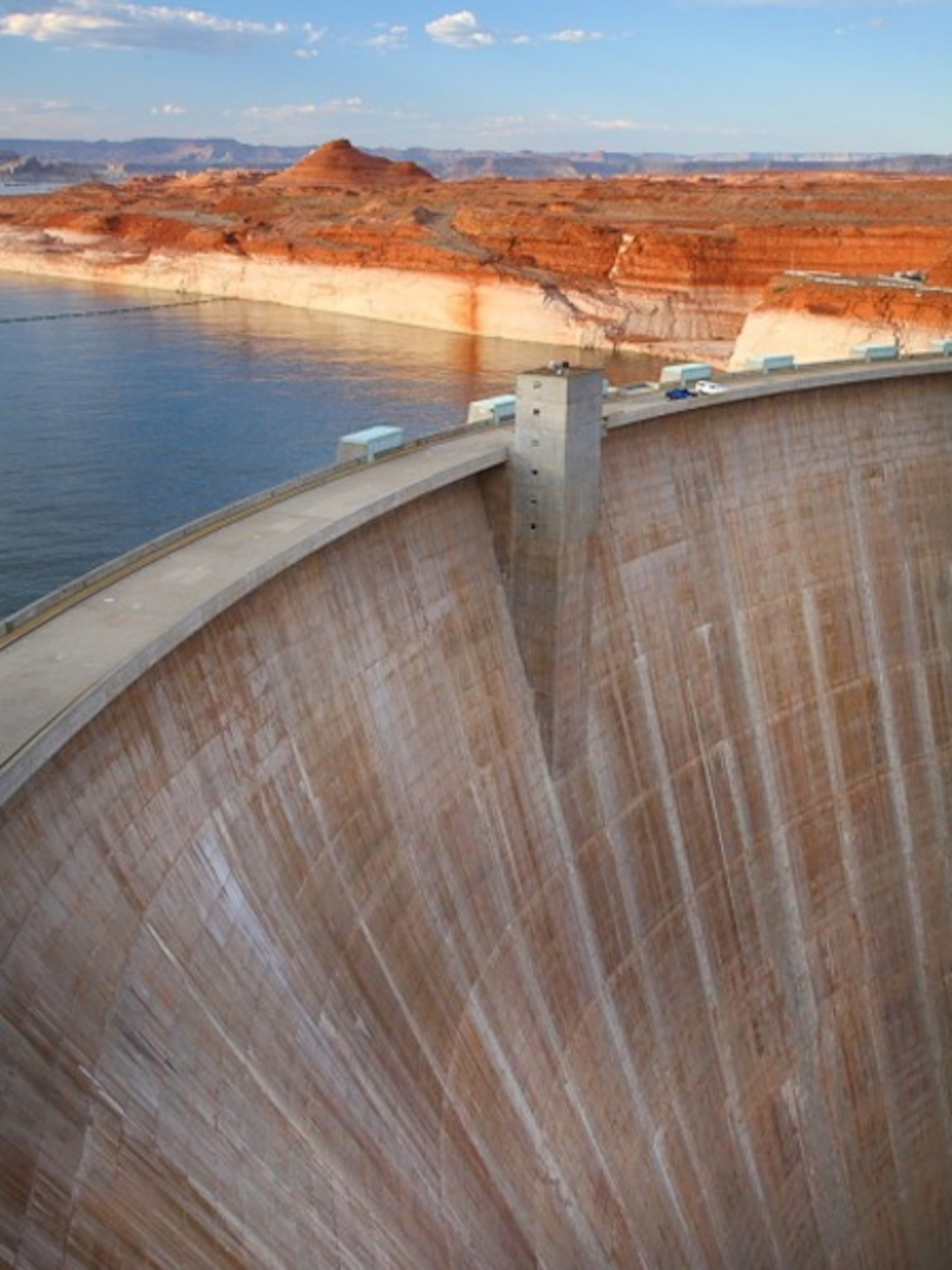
Glen Canyon Dam
Photograph by Jonathan Waterman/NG Missions
The Glen Canyon Dam collects the waters of the Colorado River to form 186-mile-long (300-kilometer-long) Lake Powell, a key piece in a river system that provides water to some 30 million people.
Dams intercept about 35 percent of Earth’s total river flows, and reservoirs cover as much ground worldwide as the state of California. The planet’s total reservoir water weight is so great it has slightly altered the speed of Earth’s rotation.
-
Wastewater Treatment Plant
Photograph by Bob Sacha
A laborer opens a valve at a wastewater treatment plant in Hebei Province, China, but the country has too few such facilities and a major water pollution problem, by its government's own admission. About 70 percent of China’s river water is considered unsafe for human contact due to sewage and industrial pollution.
The nation produces some 3.5 million tons of sewage every day—and an estimated 600 million Chinese are at risk of disease because they drink water contaminated by human or animal waste.
-
Pivot Irrigation, Colorado
Photograph by Vincent Laforet
A pivot irrigation system creates a distinctive pattern on farmland in Colorado’s San Luis Valley.
The high-altitude valley—sitting 7,000 feet (2,130 meters) above sea level—is arid but situated atop shallow groundwater sources that rise to form surface springs, lakes, and marshlands. Those waters, recharged by seasonal snowmelt from the surrounding mountains, have been used to extensively irrigate crops in the area since the late 19th century.
-
Dujiangyan Irrigation System
Photograph by O. Louis Mazzatenta
An incredible example of Chinese ingenuity and engineering skill, the Dujiangyan Irrigation System has watered crops and prevented floods on the Chengdu plains for some 2,250 years.
In 250 B.C., Li Bing, governor of the Qin state’s Shu Prefecture, initiated the engineered water system to redirect river flows. His work still distributes river water to the crops of this fertile region, now drawing the admiration of visiting tourists and hydrologists.
-
New York's Reservoir Pipeline
Photograph by Maria Stenzel
Every human needs a water supply, but many no longer live close to a source. Such is the case for the more than eight million residents of New York City, but they are well supplied thanks to a remarkable aqueduct system, seen here near a reservoir in the Catskill Mountains, some 150 miles (240 kilometers) away.
New York City’s water network includes 19 reservoirs and 3 lakes with a storage capacity of 580 billion gallons (2,195 billion liters). Over 6,200 miles (9,980 kilometers) of aqueduct, tunnel, and pipe bring water to Gotham—driven almost entirely by the forces of gravity.
-
Adelaide Pipeline
Photograph by Amy Toensing
Dyllan Haynes and friends use a pipeline like a piece of playground equipment in their Mannum, Australia, neighborhood. More than a toy, the tube is a lifeline to residents of the seaside city of Adelaide.
The 37-mile-long (60-kilometer-long) Mannum-Adelaide pipeline opened in 1955 and was the first to channel water to the growing city from the River Murray. The project was only made possible when barrages were built close to the Murray’s mouth, which prevented salty water from entering the river.
The Murray River Basin, and eastern part of the country, recently experienced a significant drought, even as parts of the Australia's northwest have become wetter during the past half-century.
-
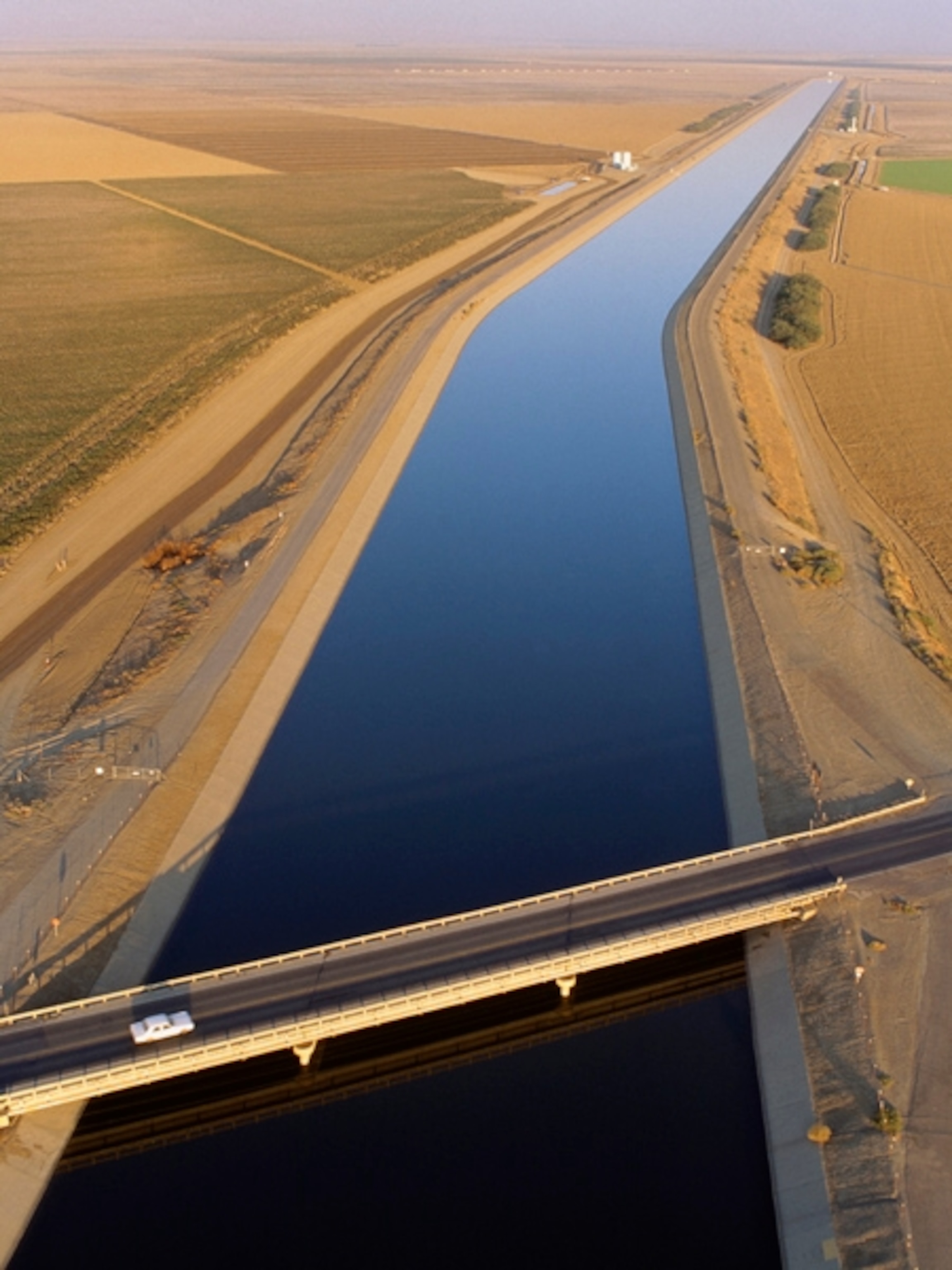
California Aqueduct
Photograph by Sarah Leen
The California Aqueduct waters the fertile farmlands of California’s Central Valley and is part of one of the world’s largest water infrastructure systems.
The California State Water Project and Central Valley Project deliver crucial water supplies to 22 million Californians and 3.6 million acres (14,570 square kilometers) of irrigated cropland. The project also controls floods and produces hydroelectric power—though it has had an outsize, sometimes deadly, impact on aquatic ecosystems in the Golden State.
-
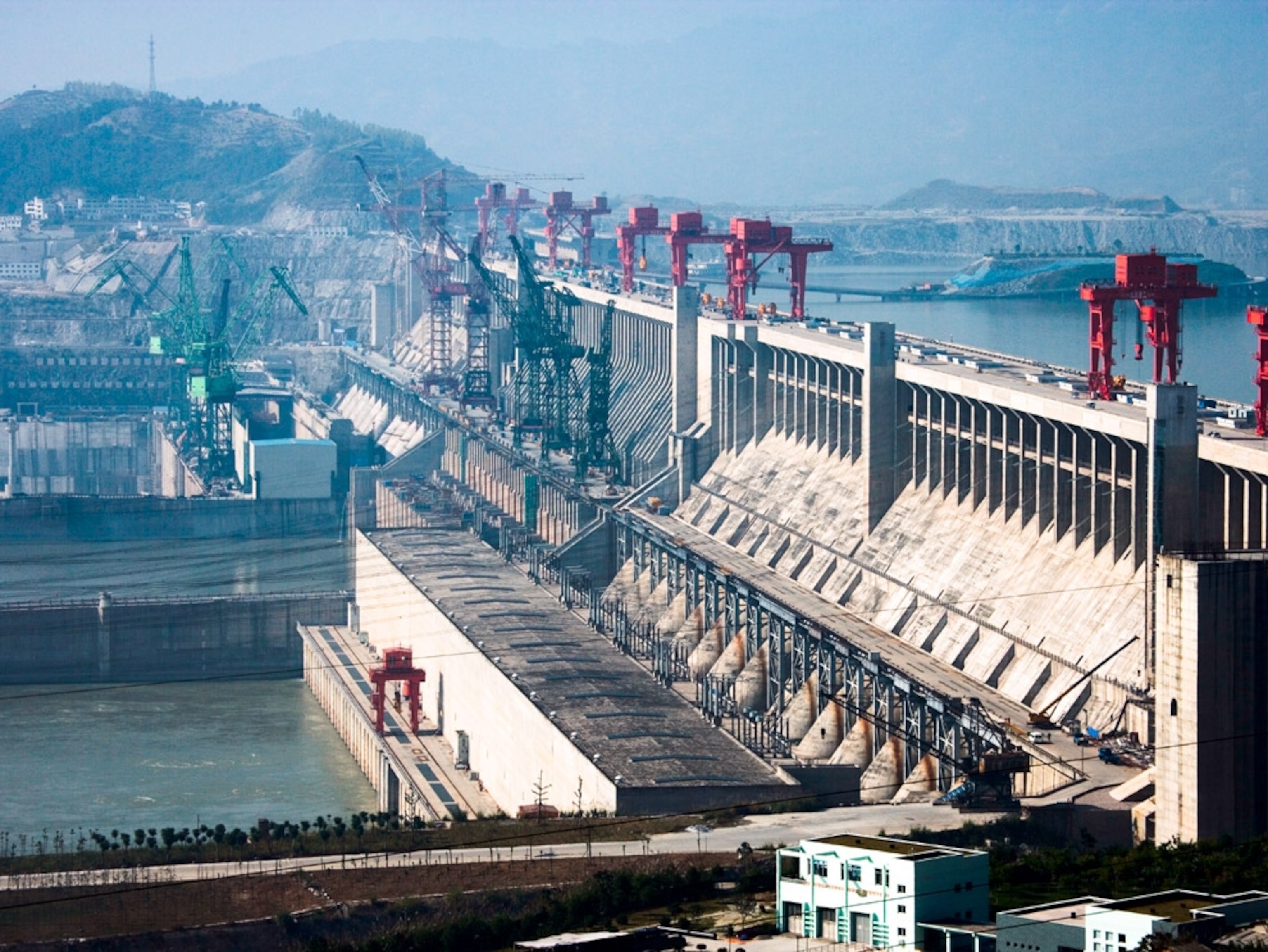
Three Gorges Dam
Photograph by Kim Steele/Getty Images
Three Gorges Dam, five times larger than Hoover Dam, was completed in 2006 to much fanfare and a healthy dose of controversy.
The project flooded an area stretching 124 miles (200 kilometers) along the China’s Yangtze River, and inundated one thousand communities. More than one million people were displaced by the dam, but officials believe it will protect 15 million people from often deadly floods while producing power from hydroelectric stations like this one in Hubei Province. Environmentalists lament the dam’s impact on river and delta ecosystems both up and downstream.
-
Irrigating Sugar Beets
Photograph by Cuauhtemoc Beltran/Imperial Valley Press/AP
Rafael Diaz watches as irrigation waters soak a sugar beet field in Calexico, California. Such smooth flows can quickly become troubled when different water management authorities wrangle over the specifics of sharing a resource that is often too scarce in the American West.
In many parts of the world, water disputes have the potential to become deadly. Since 1950, nations have taken military action over water-related disputes 37 times.
-
Desalinization Plant
Photograph by Ed Kashi
The oceans offer a nearly-limitless source of water, provided it can be efficiently and affordably desalinated. Despite significant technological advances in recent decades, like this desalination plant near Kuwait City, processes like distillation or membrane filtration are far from perfected.
Desalinization is energy intensive and produces an extremely concentrated brine byproduct with detrimental environmental effects. Wealthy, dry nations like Kuwait, Saudi Arabia, and Israel are leading the way in desalination efforts, helping to meet drinking water needs in water-short areas.
Help Save the Colorado River
You can help restore freshwater ecosystems by pledging to cut your water footprint. For every pledge, Change the Course will restore 1,000 gallons back to the Colorado River.
Freshwater Advocates
-
Sandra Postel
Sandra is a leading authority on international freshwater issues and is spearheading our global freshwater efforts.
-
Jonathan Waterman
He's paddled the Colorado River from its headwaters to the delta, in an effort to bring awareness to this mighty river at risk.
-
Osvel Hinojosa Huerta
For more than 15 years, Osvel Hinojosa Huerta has been resurrecting Mexico's Colorado River Delta wetlands.
Advertisement
Water Currents, by Sandra Postel and Others
-
Timelapse Shows Beauty of Lake Superior
A year in the making, this video highlights nature's splendor.
-
Wastewater Brings New Life
A wetland flourishes in Mexico thanks to a treatment plant.
-
Uncovering Great Lakes Garbage Patch
Scientists investigate the impacts of "micro plastics" on lake ecosystems.
Special Ad Section
The World's Water
-
Help Save the Colorado River
NG's new Change the Course campaign launches. When individuals pledge to use less water in their own lives, our partners carry out restoration work in the Colorado River Basin.
-
Water Grabbers: A Global Rush on Freshwater
A special series on how grabbing water from poor people and future generations threatens global food security, environmental sustainability, and local cultures.
